IT Refurbishment & Value Recovery
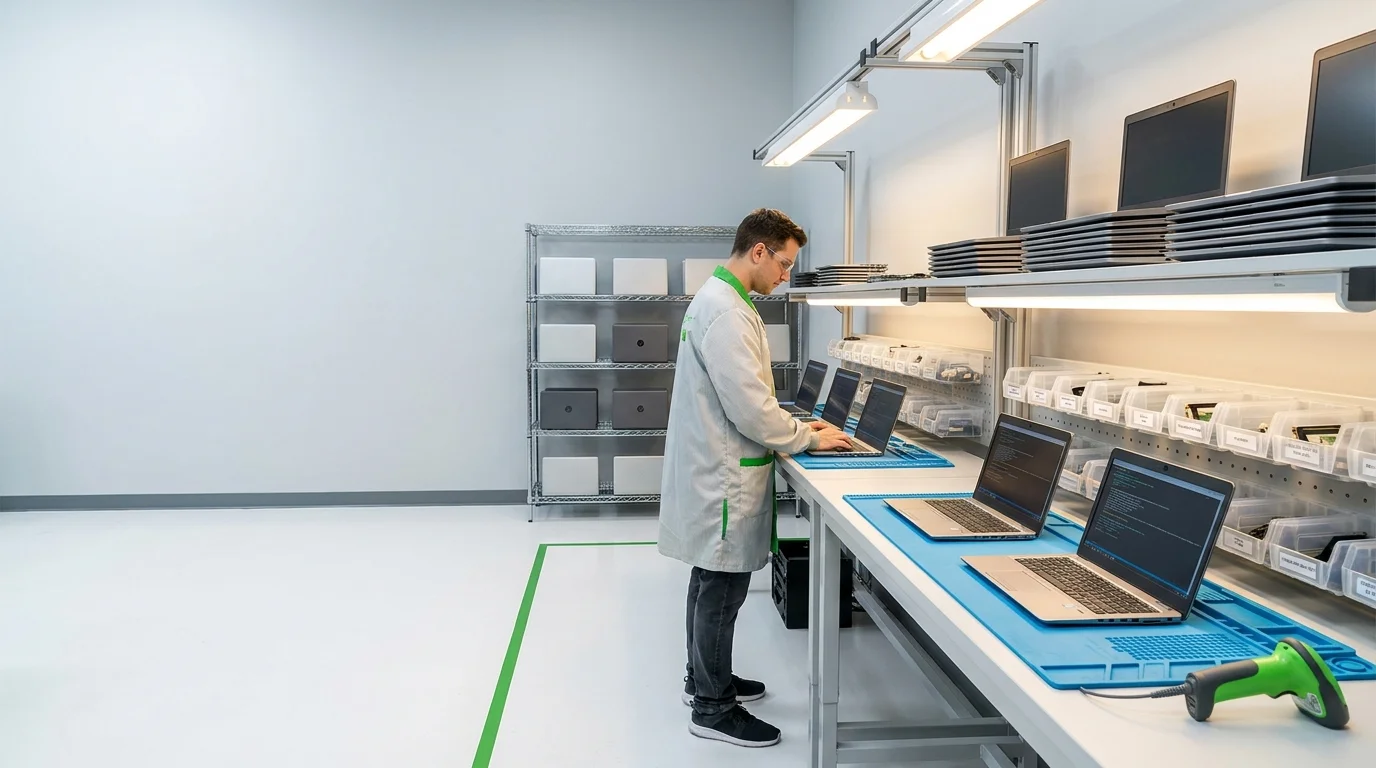
eWaste Go routes IT equipment with resale or reuse value away from the shredder and into refurbishment, grading, wiping, and remarketing retired assets so a business recovers some value, not just a write-off.
Certified
Certified
Value Recovery Before the Shredder
A share of the recovery proceeds and a complete serial-level reconciliation go back to the business that retired the equipment.
Not every device that comes off a company's books is at the end of its useful life. A three-year-old laptop with a healthy battery and a working screen, or a server pulled during a refresh cycle with drives still intact, is a candidate for refurbishment, not recycling outright. Sorting that out is what keeps working hardware in circulation and turns a cost center into a partial recovery.
How Assets Get Sorted
The same inventory process that drives eWaste Go's IT asset disposition work applies here. An asset mapping and network discovery walkthrough identifies what's still valuable versus what's at the end of its life, so equipment worth remarketing doesn't get shredded alongside equipment that has no resale value. A three-year-old server with working drives is worth sorting from a decade-old desktop headed straight for recycling, and that sorting has to happen deliberately, not by accident.
Every device bound for refurbishment gets a verified data wipe before anything else happens to it, using the same hard drive destruction and sanitization standards that apply across eWaste Go's data destruction work. A device doesn't move toward resale until its data has been handled, regardless of how much resale value it carries.
Value Recovery for Businesses
As of 2026, for a business retiring IT assets at scale, value recovery is the financial side of an otherwise cost-only process. Equipment gets graded against current market value, wiped and prepared for resale, and remarketed through the network's channels, with proceeds shared back and a full reconciliation showing what happened to each serialized asset. That reconciliation matters for finance and asset-management teams that need to close out a retired asset on the books, not just confirm it left the building.
Four Steps. Every Time.
Spotting
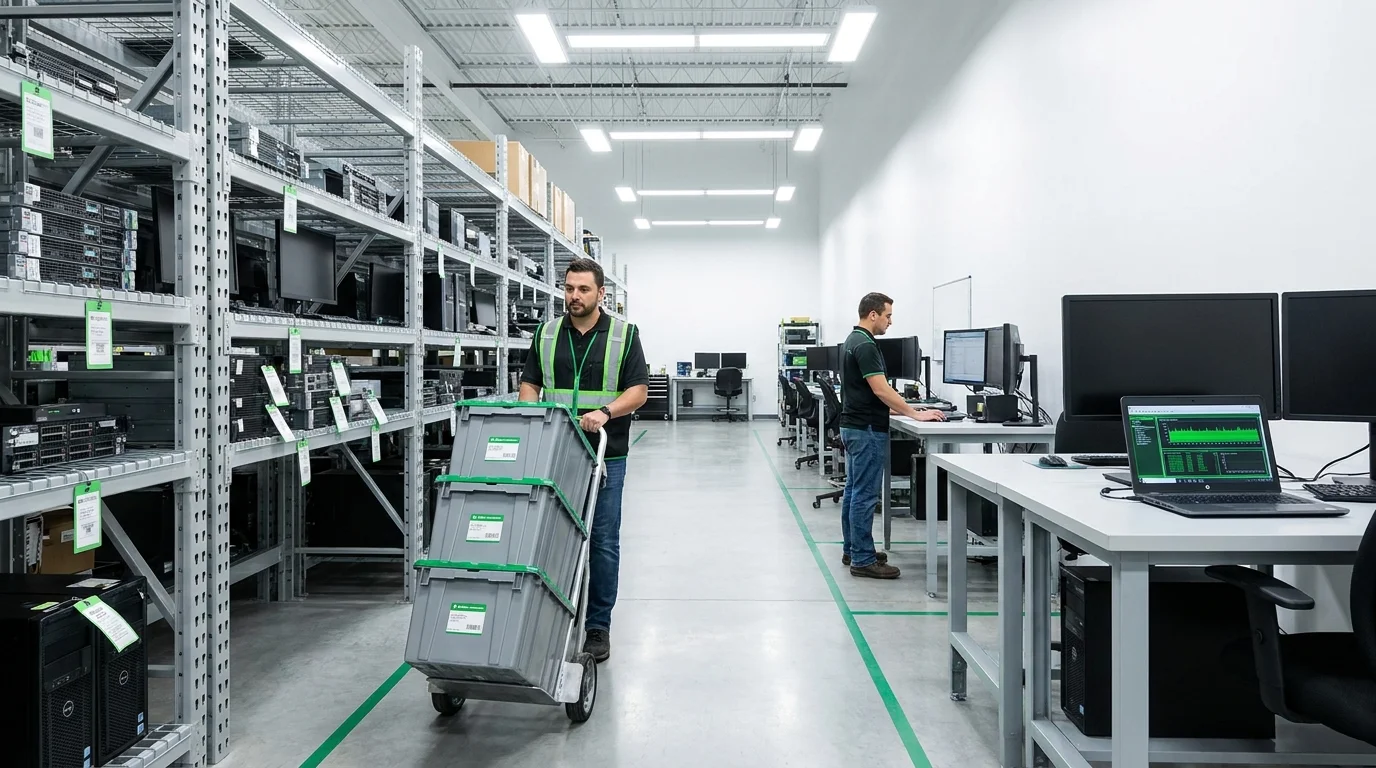
An inventory walkthrough with asset mapping and network discovery identifies what’s obsolete versus what’s still in active use.
Logistics
GPS-tracked transportation and QR-code asset labels keep a documented chain of custody from your dock to ours.
Execution
Data destruction, sanitization, recycling, and refurbishing happen under R2v3 and ISO-audited controls.
Certification
Documentation, including any certificate of destruction, is provided within 24 hours of the service.
Frequently Asked Questions
Which electronics qualify for refurbishment versus recycling?
Laptops, desktops, and servers with working components and reasonable remaining life are strong refurbishment candidates. Equipment with failed components or outdated specs is better suited to recycling.
How does the value recovery process work?
Equipment gets graded, wiped of all data, and remarketed, with a share of the proceeds and a serial-level reconciliation going back to the business that retired the assets.
What if my equipment has no resale value?
It moves into eWaste Go's standard electronics recycling process instead, processed under the same zero landfill policy as everything else in the network.
Is refurbished IT equipment actually reused, or just resold as scrap?
Refurbished equipment goes through grading and a verified data wipe before resale, the same standard applied whether a device is being remarketed or recycled.
Do you provide documentation for what happens to refurbished assets?
Yes. A serial-level reconciliation tracks each asset from pickup through remarketing, the same documentation standard used across eWaste Go's IT asset disposition work.
Have Retired IT Equipment Worth Recovering?
Find out what your retired IT assets are worth before they go to the shredder.
Get a QuoteOr call (888) 899-8896
Certified
Certified