Electronics Recycling
As of 2026, eWaste Go recycles computers, monitors, peripherals, and a wide range of other electronics for both residential customers and businesses, under an R2v3-certified, zero landfill process.
Certified
Certified
Free for Homes, Scheduled for Businesses
Residents get free drop-off with no appointment needed. Businesses get a scheduled pickup sized to the volume involved, from a single closet cleanout to an ongoing program for a company that turns over equipment on a regular cycle.
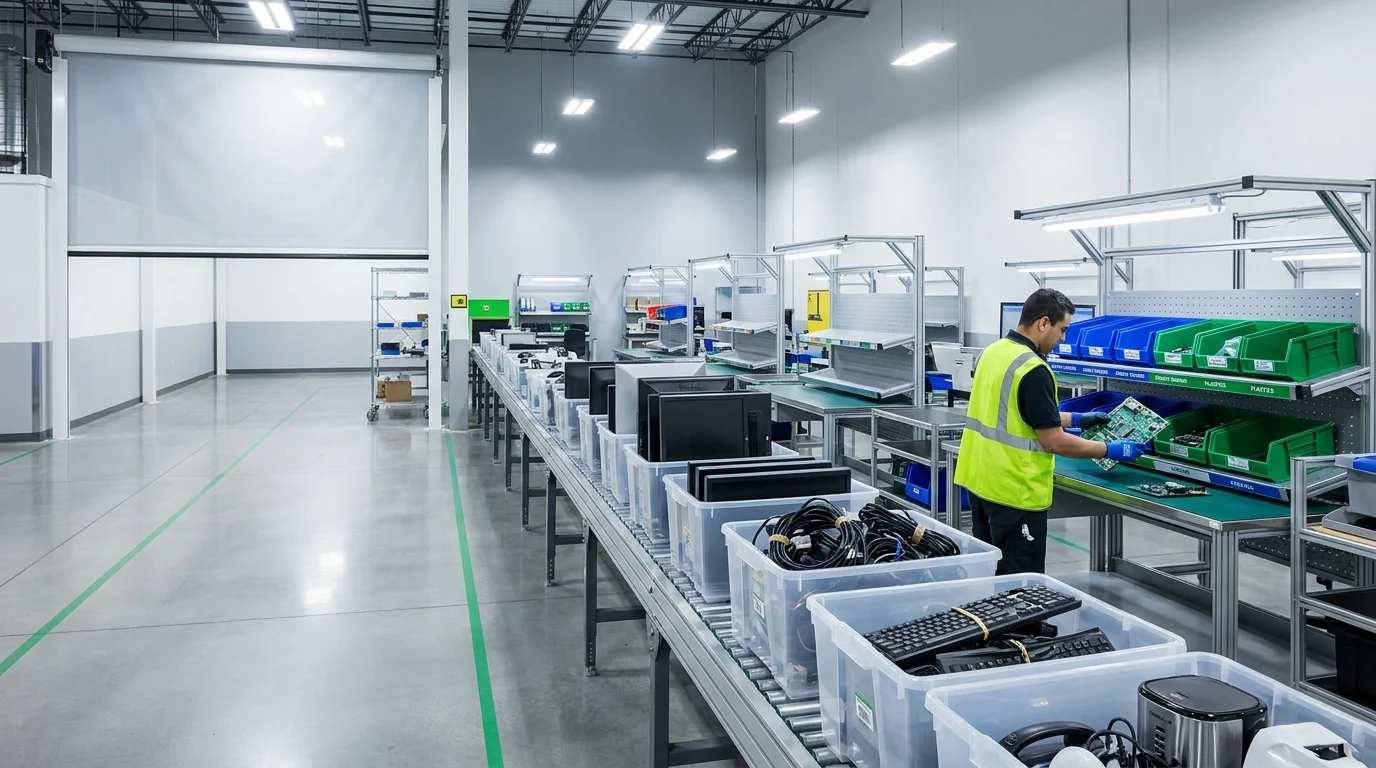
Electronics recycling covers the base of what eWaste Go does. Devices that have reached the end of their useful life get processed so recyclable material gets recovered, not landfilled, while anything that still has resale or reuse value gets routed to refurbishment, not the shredder.
What Gets Accepted
Desktop computers, laptops, servers, tablets, and computer peripherals like keyboards, cords, and cables all come through the same free process, along with cell phones, monitors, cameras, and gaming consoles. Rechargeable batteries and UPS battery backup systems are accepted as well, and non-contaminated medical and laboratory electronic equipment can be recycled through the same channel.
Printers, scanners, fax machines, and stand-alone copiers are accepted too, though larger units may carry a fee tied to size, not the flat free rate that covers most electronics. A handful of categories fall outside what the network can take, including circuit boards on their own, hazardous materials, household appliances, and compressed gas cylinders.
For Businesses
Electronics recycling for a business looks different from a single laptop drop-off. A company clearing out a storage closet, retiring a batch of workstations during a refresh cycle, or decommissioning part of an office needs pickup logistics, an inventory record, and documentation that a compliance or sustainability team can use, not just a truck that hauls equipment away. eWaste Go's business pickups run through the same R2v3-audited chain of custody as the rest of the network, with GPS-tracked transportation and a documented record from the moment equipment leaves the building.
Where the Material Goes
Equipment that's reached the end of its usable life gets separated and processed under a zero landfill policy, so recyclable material is recovered, not dumped. The recoverable metals inside circuit boards and connectors get reclaimed, not buried, and data-bearing components go through destruction and sanitization first, no matter whether the rest of the device is headed for recycling or resale.
Four Steps. Every Time.
Spotting
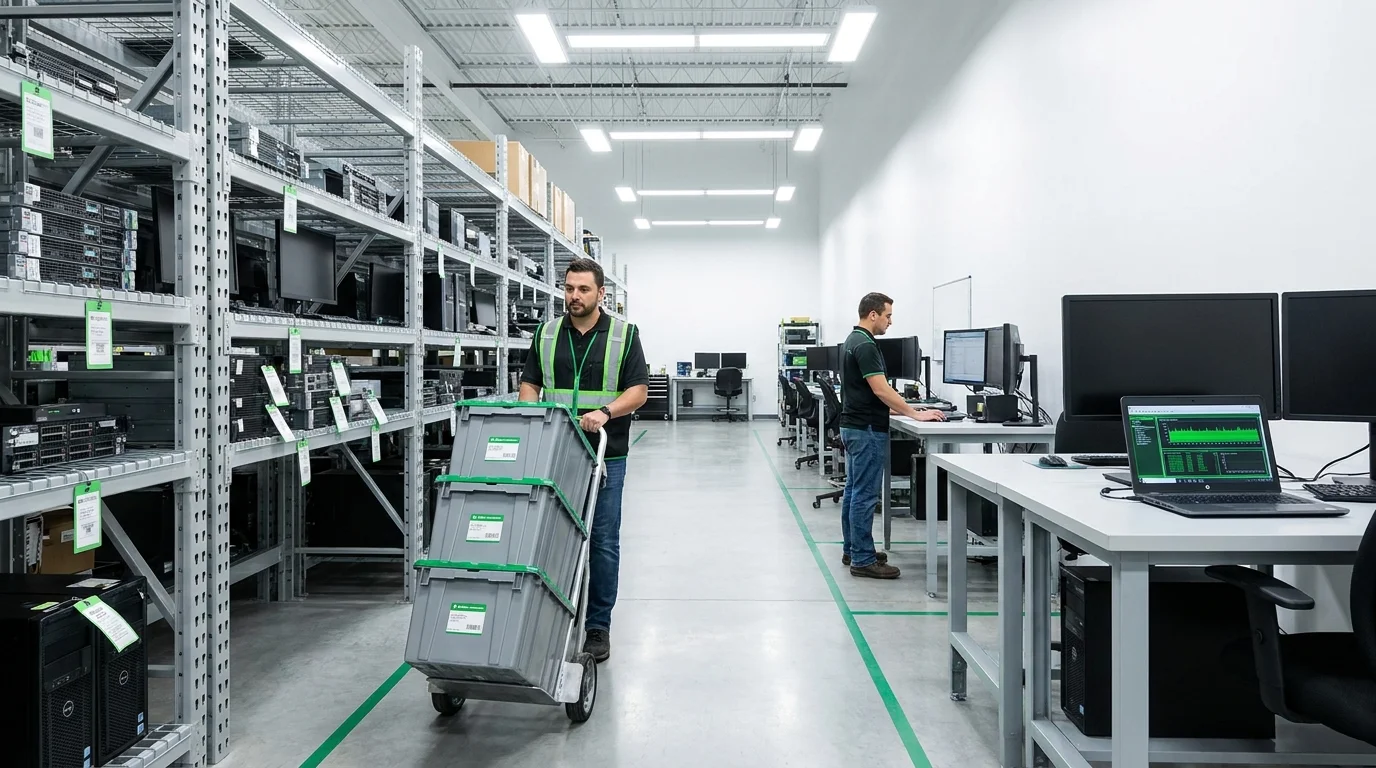
An inventory walkthrough with asset mapping and network discovery identifies what’s obsolete versus what’s still in active use.
Logistics
GPS-tracked transportation and QR-code asset labels keep a documented chain of custody from your dock to ours.
Execution
Data destruction, sanitization, recycling, and refurbishing happen under R2v3 and ISO-audited controls.
Certification
Documentation, including any certificate of destruction, is provided within 24 hours of the service.
Frequently Asked Questions
Where can I dispose of old electronic items?
Residents can drop off electronics for free at any eWaste Go location, no appointment or minimum quantity required. Businesses schedule a pickup instead, sized to the volume of equipment.
Can I bring old electronics to Best Buy for recycling instead?
Retail take-back programs work for a small handful of consumer devices, but they don't offer certified data destruction, a documented chain of custody, or business pickup service, which matters once a company is retiring equipment that ever held data.
What electronics do you accept?
Computers, laptops, servers, tablets, peripherals, cell phones, monitors, cameras, gaming consoles, rechargeable batteries, and battery backup systems are all accepted free of charge. Printers, scanners, fax machines, and stand-alone copiers may carry a fee based on size.
Is business electronics recycling really free?
Residential drop-off is free. Business pickup is scheduled and sized to volume, which is the more practical option once a company is retiring more than a handful of devices at once.
What happens to the data on a computer before it's recycled?
Every data-bearing device goes through hard drive destruction or NIST 800-88 sanitization before recycling or resale, with a certificate of destruction available for the record.
Ready to Recycle Responsibly?
Schedule a free residential drop-off or a business pickup.
Get a QuoteOr call (888) 899-8896
Certified
Certified