Data Center Decommissioning
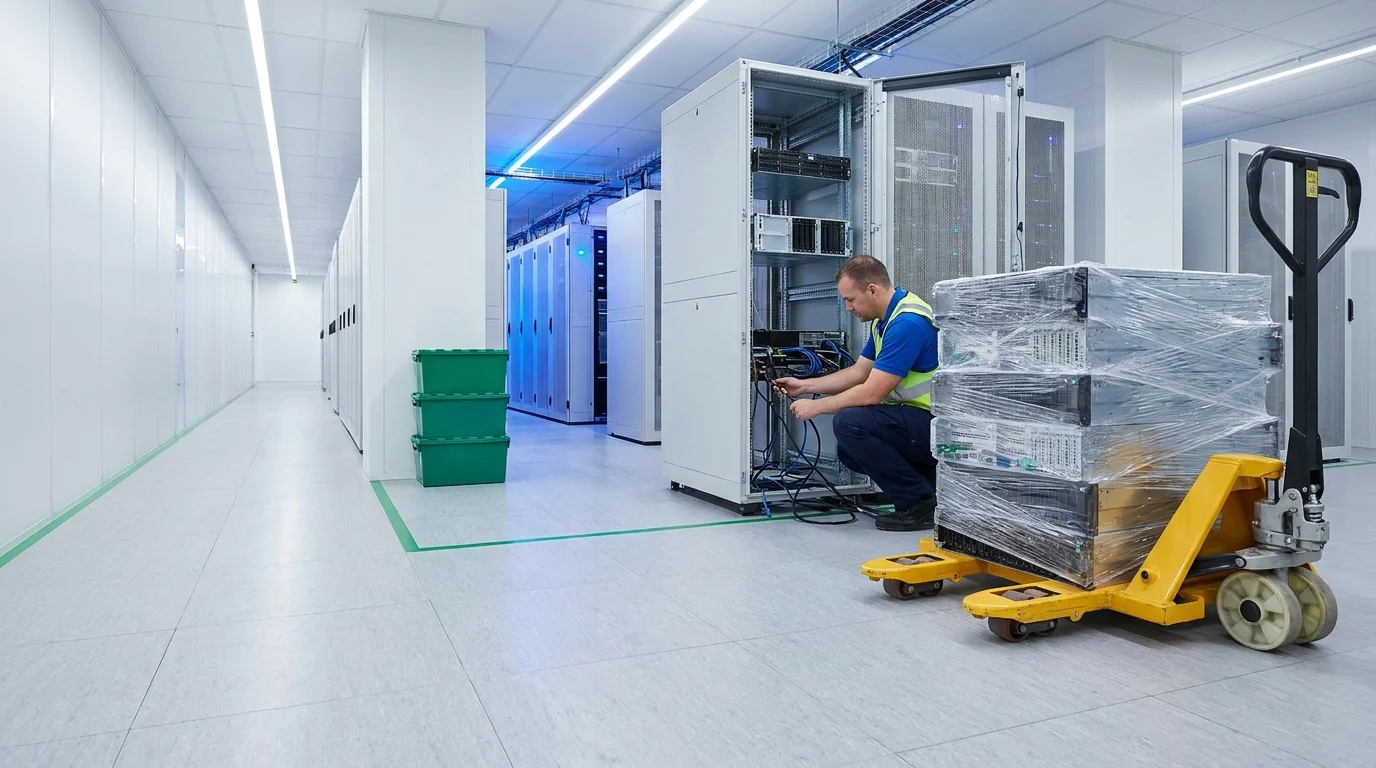
eWaste Go decommissions data centers and server rooms for businesses relocating, consolidating, or retiring infrastructure, running full rack-and-stack teardown through the same R2v3 and ISO-certified process that covers the rest of the network.
Certified
Certified
Full Rack-and-Stack Teardown, Documented
Every asset gets inventoried, tracked, and processed, with documentation delivered within 24 hours of the service.
A data center decommission is a different scale of problem than a routine equipment refresh. Racks of servers, networking gear, and storage arrays all need to come out in a coordinated sequence, with data-bearing drives handled before anything leaves the building and a record showing what happened to every asset in the room.
How a Decommission Runs
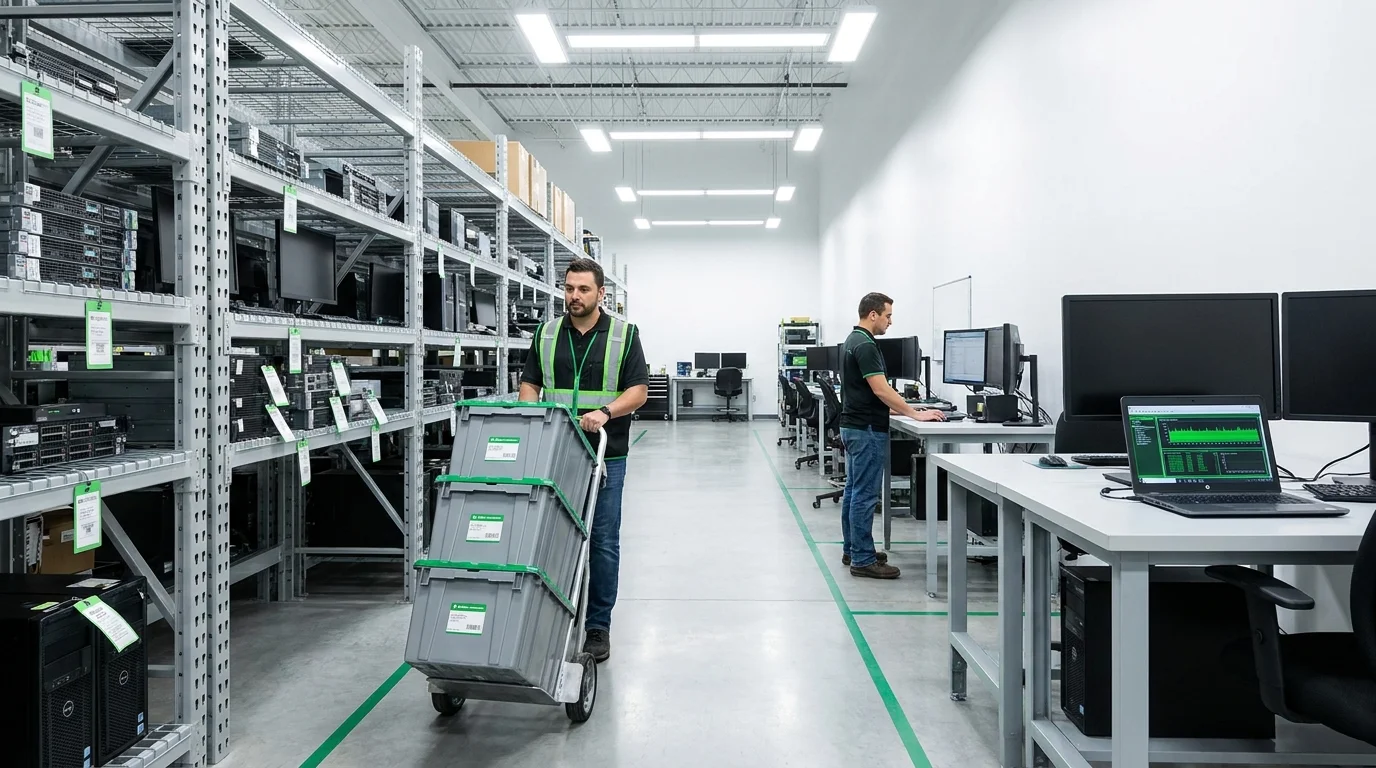
The process starts with an inventory walkthrough using asset mapping and network discovery to identify what's being decommissioned versus what's moving to a new location. That distinction matters most in a partial decommission or a phased data center migration, where some equipment is retiring and some is relocating.
From there, GPS-tracked transportation and QR-code asset labels keep a documented chain of custody intact for every rack and every drive, with careful loading and unloading given the value and fragility of server-grade hardware. Data destruction happens on the equipment that's staying behind, using the same hard drive destruction and NIST 800-88 sanitization standards applied across eWaste Go's data destruction work, while equipment with resale value moves into the value-recovery and refurbishment pipeline, not the shredder.
Built for Regulated Environments
Data centers supporting healthcare, financial services, or government workloads carry compliance requirements that don't end when the hardware gets unplugged. As of 2026, eWaste Go's decommissioning process is built to support HIPAA and other regulated-industry audit requirements, with the same R2v3 and ISO certification backing every step, so the paperwork holds up when a compliance team or an auditor asks for it.
Four Steps. Every Time.
Spotting
An inventory walkthrough with asset mapping and network discovery identifies what’s obsolete versus what’s still in active use.
Logistics
GPS-tracked transportation and QR-code asset labels keep a documented chain of custody from your dock to ours.
Execution
Data destruction, sanitization, recycling, and refurbishing happen under R2v3 and ISO-audited controls.
Certification
Documentation, including any certificate of destruction, is provided within 24 hours of the service.
Frequently Asked Questions
What does data center decommissioning include?
Inventory and asset mapping, GPS-tracked and documented removal of racks and equipment, data destruction on retiring hardware, and a settlement-ready report covering the entire decommission.
How do you handle data on decommissioned servers?
Every data-bearing drive goes through hard drive destruction or NIST 800-88 sanitization before it leaves the building or moves toward resale, with a certificate of destruction for the record.
Can you decommission part of a data center while other equipment stays in service?
Yes. The inventory walkthrough identifies what's being retired versus what's staying or relocating, so active equipment doesn't get swept up with hardware that's already marked for retirement.
Do decommissioned servers get resold, or is everything destroyed?
Equipment with resale value moves into eWaste Go's value-recovery and refurbishment process, not straight to the shredder, with a serial-level reconciliation for the business retiring the assets.
How quickly is documentation provided after a decommission?
Documentation, including any certificate of destruction, is provided within 24 hours of the service.
Planning a Data Center Move or Retirement?
Schedule a certified, fully-documented data center decommission.
Get a QuoteOr call (888) 899-8896
Certified
Certified